 Set Theory
Three Ways to Open the Same Set
An analytical breakdown of opening gambits exploring ambient tension, rhythmic momentum, and harmonic anchors for disciplined DJ set planning.
Explore set-flow cases about openings, transitions, contrast, peaks, resets, and closing choices.
A Set Arc describes a sequence of musical roles, not a ready-made playlist or a list of “best songs to mix”. Study pacing, density, transition intent, reset points, and energy changes in any DJ workflow.
For club DJs, open-format DJs, wedding and event DJs, beginning selectors, and DJ workshop teachers. These cases remain useful with Serato, other DJ software, or a notebook.
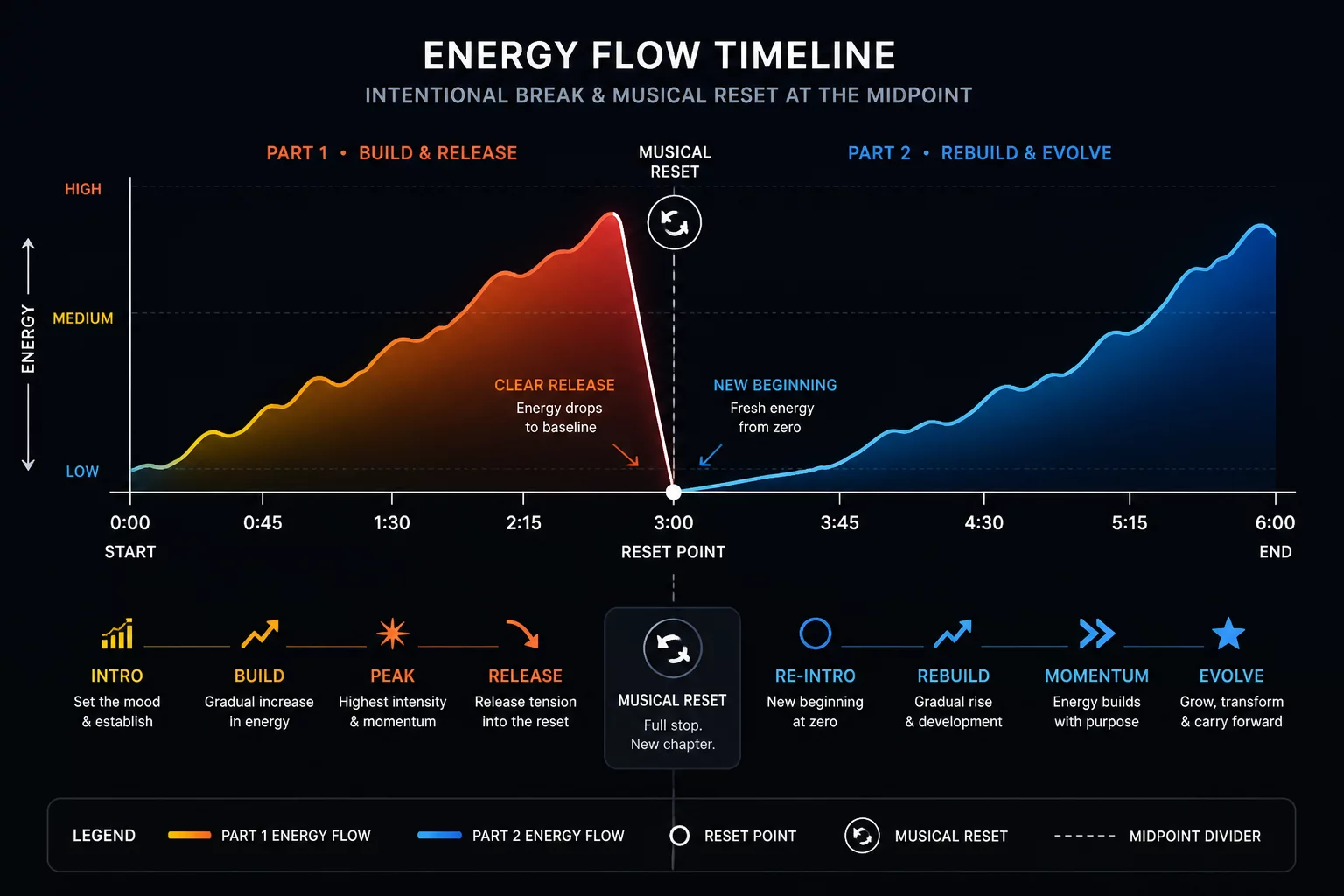
Ten strong tracks, but every next track tries to be more intense. Compare three ways to shape the same material: Continuous Build, Build / Reset / Build, and Two Distinct Chapters. The question is what each transition does, rather than which track is best.
Ten strong selections all compete for the peak role. A continuous rise leaves little room for contrast, recovery, or an ending with its own purpose.
Reorder identical records into three divergent arcs to observe how shifting transition intent completely modifies perceived momentum, tension release, and emotional weight.
Assign musical roles before fixing a sequence. Opening, establishment, build, contrast, peak, release, and close are decisions made by the DJ in response to the room.
Transitions rely on micro-layering 32-bar percussion blends with persistent low-end handoffs. EQs prioritize drum presence over melodic clashes, forcing steady upward momentum without letting basslines overlap.
Transition 4-to-5 uses a stark breakdown crossfade or long ambient tail exit, dropping 40% of harmonic weight. This resets ear fatigue instantly, giving the second wave double the physical impact.
The central pivot (Track 5 into 6) acts as a sonic genre bridge. Intent shifts from micro-loop blending to phrase-matched key modulation, establishing a totally new tonal aesthetic for the second half.

Explore in-depth technical analysis on micro-tension, energy drop mechanics, and harmonic modulation strategies for high-impact live sets.
Architectural roadmaps balancing starting intent, progressive build, peak release, and calculated closing phases.
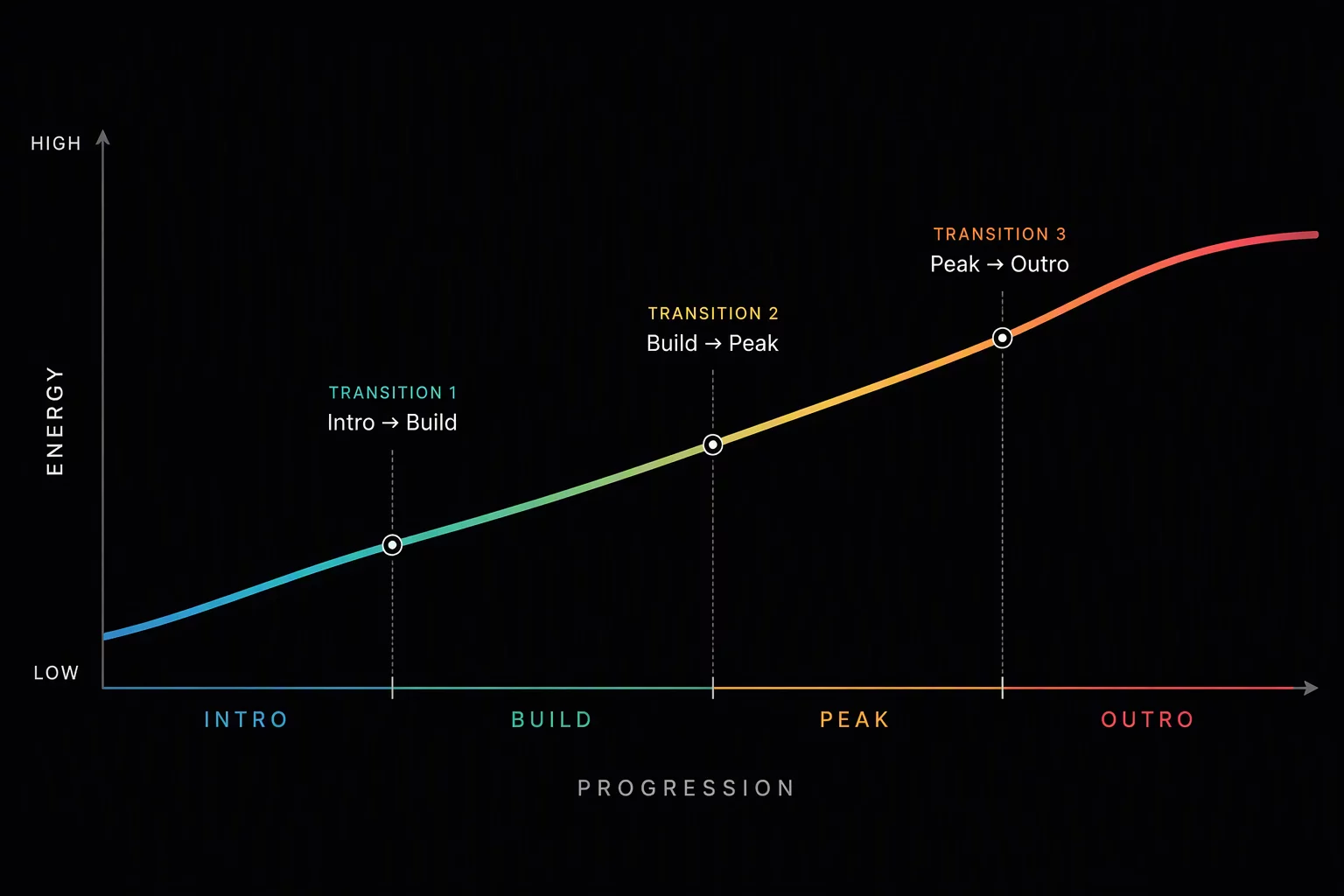 Pacing Core
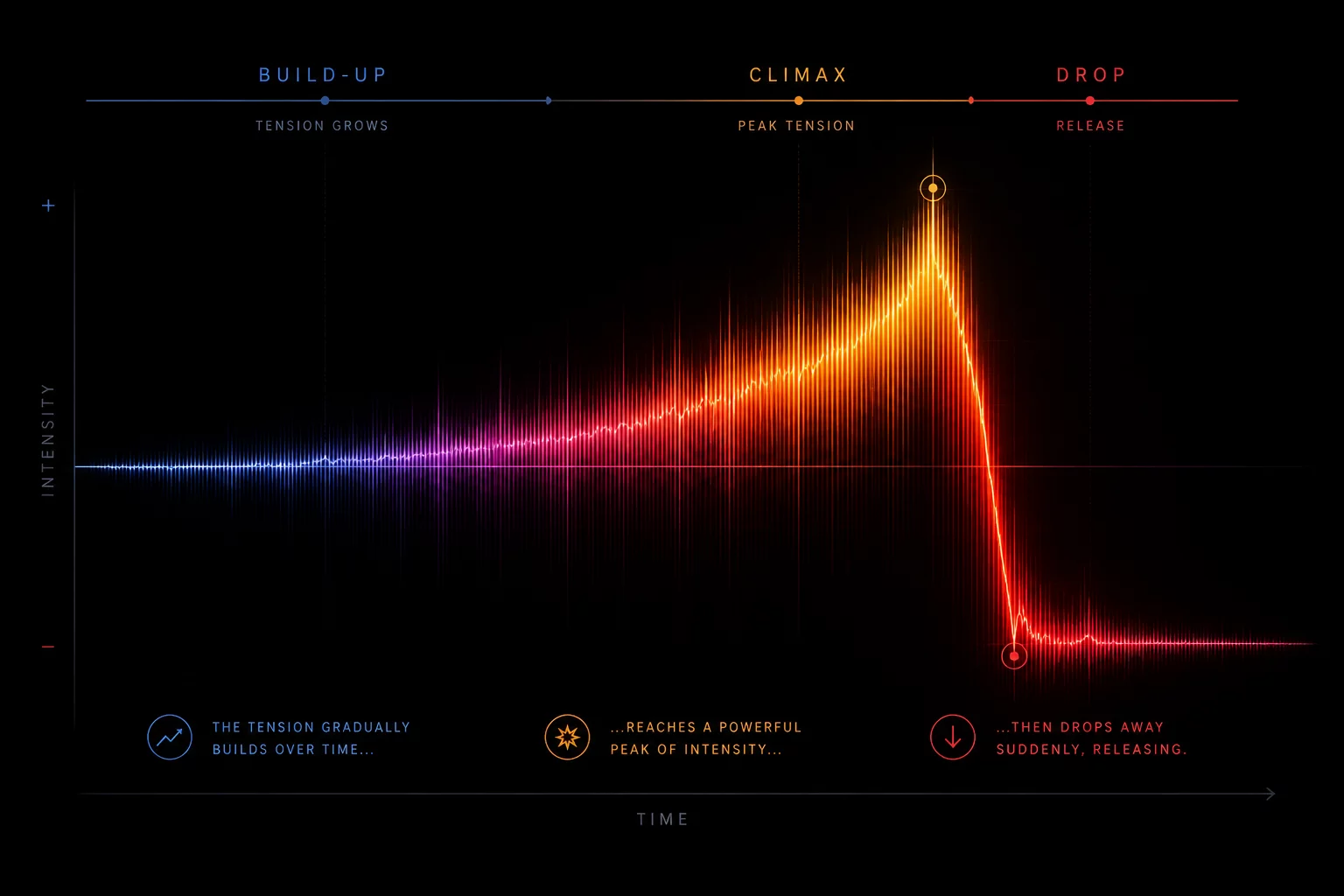 Dynamic Flow
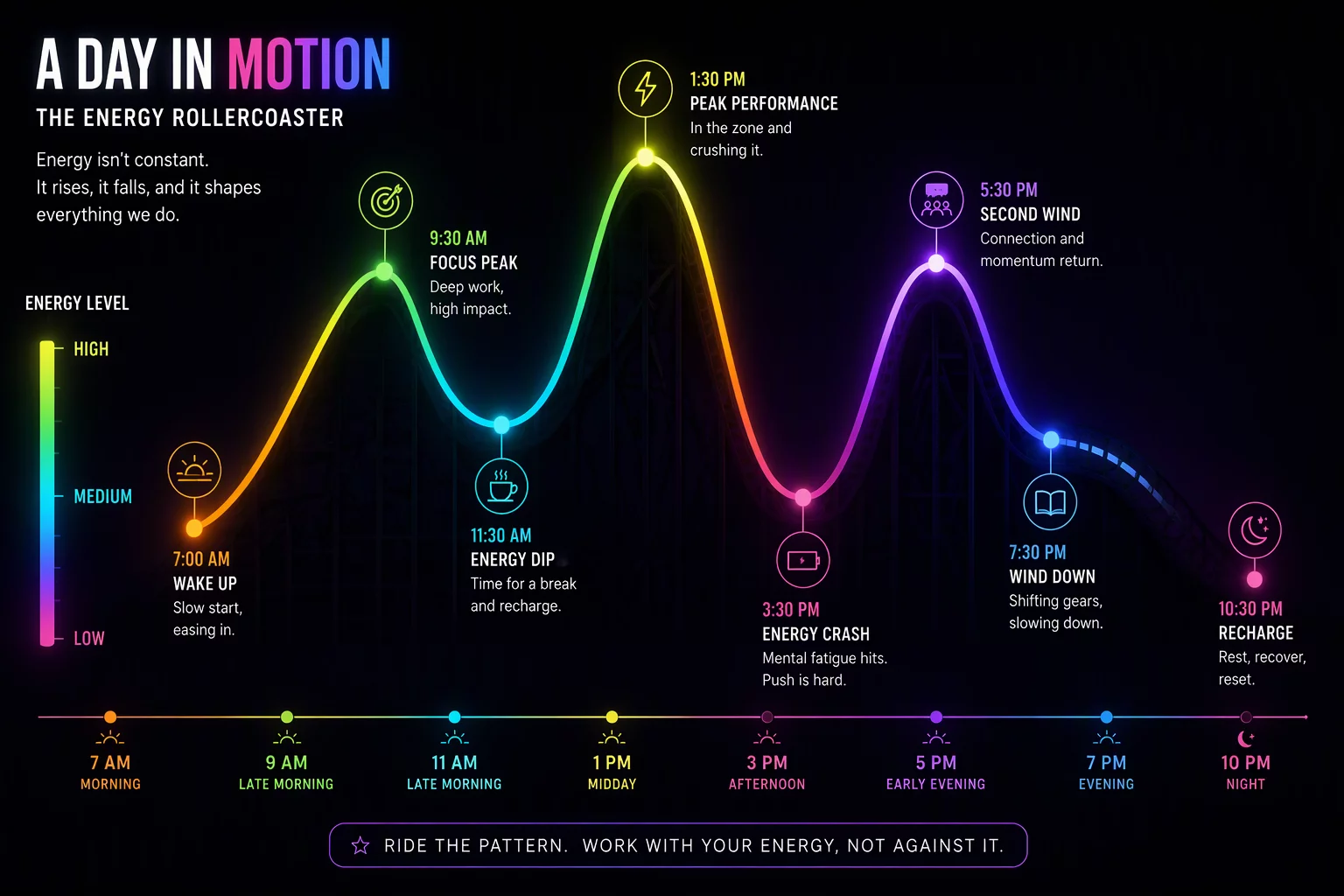 Multi-Peak
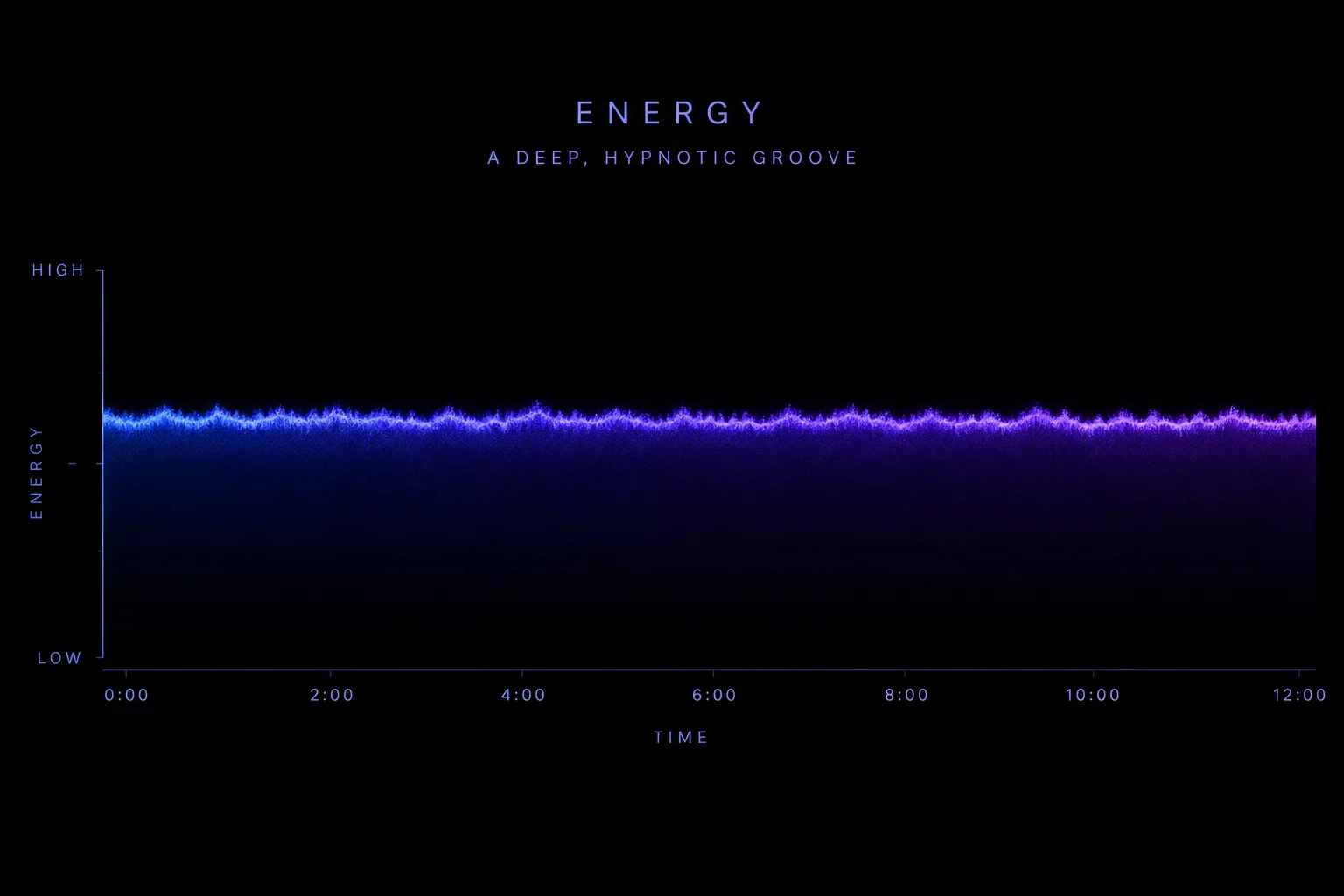 Hypnotic Club
 Prime Slot
 Tactical Shift
Explore how structured energy curves, transition intent, and density calibration fundamentally outperform spontaneous track-to-track transitions.
Sets follow predetermined structural arcs (build, tension release, or reset phases) preserving listener stamina over extended club durations.
Immediate pressure escalation track-by-track, leading to premature dancefloor fatigue and depleted dynamic headroom within 40 minutes.
Tracks selected by acoustic footprint and element density; explicit stripping of low-end mud through surgical EQ staging and fader pacing.
Continuous full-frequency layering causing masked mid-ranges, phase friction, and loss of impactful percussive punch.
Transitions engineered specifically to pivot tonal direction, clear auditory palette, or inject sudden rhythmic tension with exact phrasing.
Mechanical 32-bar crossfading without narrative purpose, treating every song transition as a repetitive technical requirement.
Intentional dip tracks deployed before critical crescendos to rebuild headroom and amplify the visceral impact of incoming peaks.
Fear of reducing tempo or intensity keeps output at maximum level, neutralizing drops and flattening emotional response.
Delivering structured architectural analysis, set-pacing reviews, and live transition clinics to sound curators and club DJs across worldwide time zones.
Synchronous live set-arc deconstructions, real-time waveform diagnostic audits, and club sound system preparation clinics.
Deep dive sessions on extended marathon pacing, subtle tension modulation, and peak-energy release management.
Targeted feedback on rapid genre shifting, multi-deck layering, and strategic mid-set reset points for club selectors.
Festival arc calibration, opening slot boundary management, and post-gig performance analytical breakdowns.
Intimate listening bar sequencing, nuanced harmonic continuity, and dynamic range discipline across long-form sets.
Day-to-night outdoor dynamic transitions, contrast creation without room drop, and track pairing stress tests.
All remote workshops operate with 24-bit 48kHz audio streams, digital mixer routing, and live cue telemetry, ensuring that physical distance introduces zero compromise to technical feedback.
Our instructors and set analysts dissect track positioning, dancefloor pacing, and live tension arcs based on decades of resident club experience.

Specializes in high-tension arc construction, peak-hour energy sustainment, and real-time room reading strategies across open-to-close sessions.

Focuses on EQ sculpting, key modulation dynamics, and designing seamless musical resets that re-engage dancefloors without breaking continuity.

Pioneered the categorical functional library tag workflow, guiding emerging selectors through opening protocols, bridge tracks, and closing sets.
Step through an analytical DJ timeline to observe harmonic pacing, intensity shifts, and calculated reset points that protect room tension from early fatigue.
Establishes sonic baseline and room trust with hypnotic sub frequencies and unhurried percussion.
Maintains headroom for later melodic escalations without overwhelming the room early.
Strategic field records dissecting energy modulation, crowd psychology, and purposeful DJ set planning across dynamic floor environments.
Set Theory
An analytical breakdown of opening gambits exploring ambient tension, rhythmic momentum, and harmonic anchors for disciplined DJ set planning.
 Energy Flow
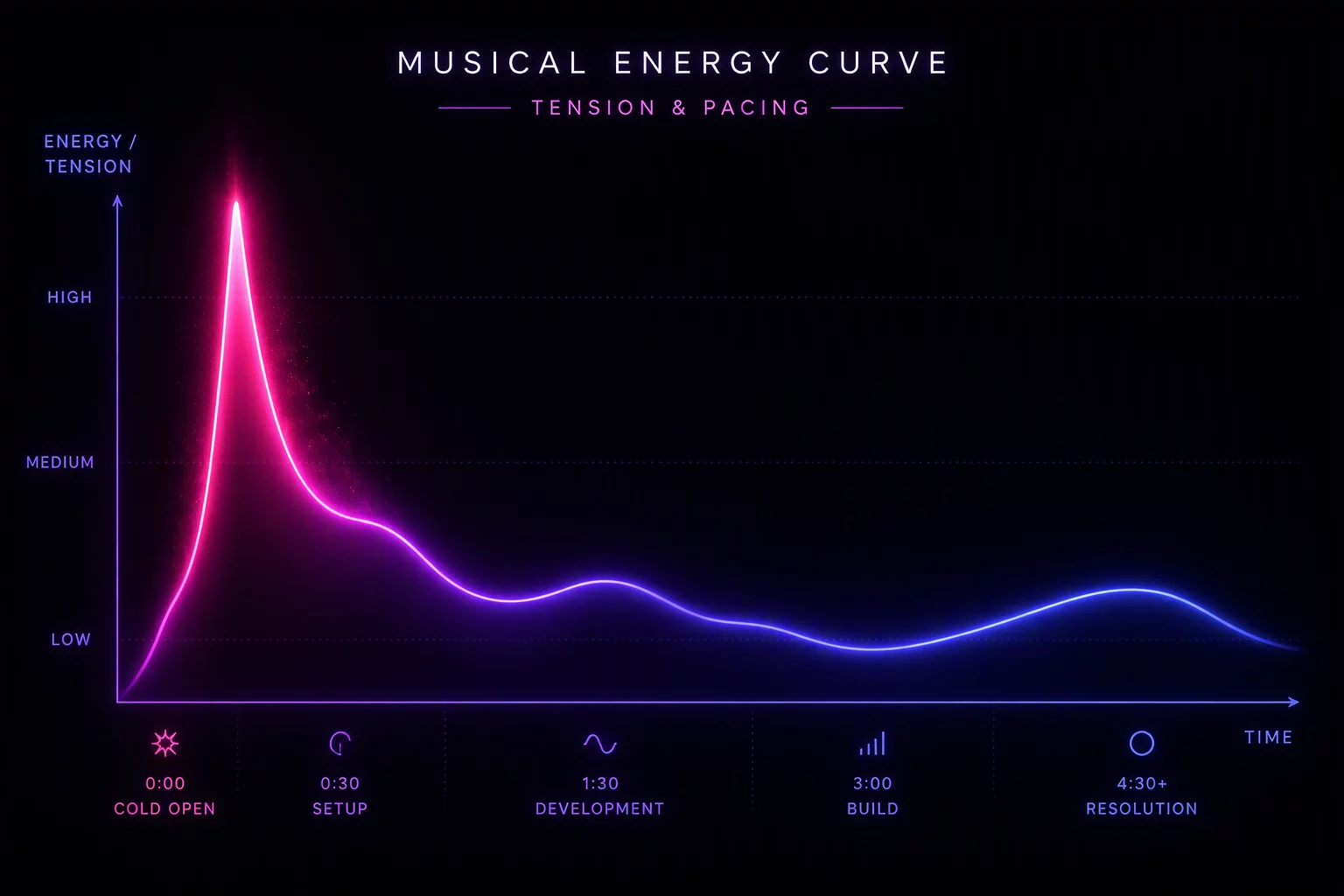
Why prematurely exhausting floor velocity forces an unsustainable ceiling and how recovery curves re-establish headroom.
 Transitions
Navigating sudden timbral and rhythmic shifts without breaking audience trust through tactical groove bridges.