The Smooth Landing Close Arc
A methodical tapering of tempo, frequency density, and rhythmic urgency designed to leave the room in a state of resolved, memorable atmospheric completion.
- Ideal Slot: Final Hour / Set Close
- Harmonic Step: -2 to -1 Camelot (Descent)
- BPM Window: 132 BPM → 120 BPM
- Tension Index: Low (Sub-Zero Release)
Engineering a Controlled Descent Without Floor Evacuation
Closing a high-intensity session requires deliberate reduction of physical impact while amplifying tonal warmth and emotional permanence.
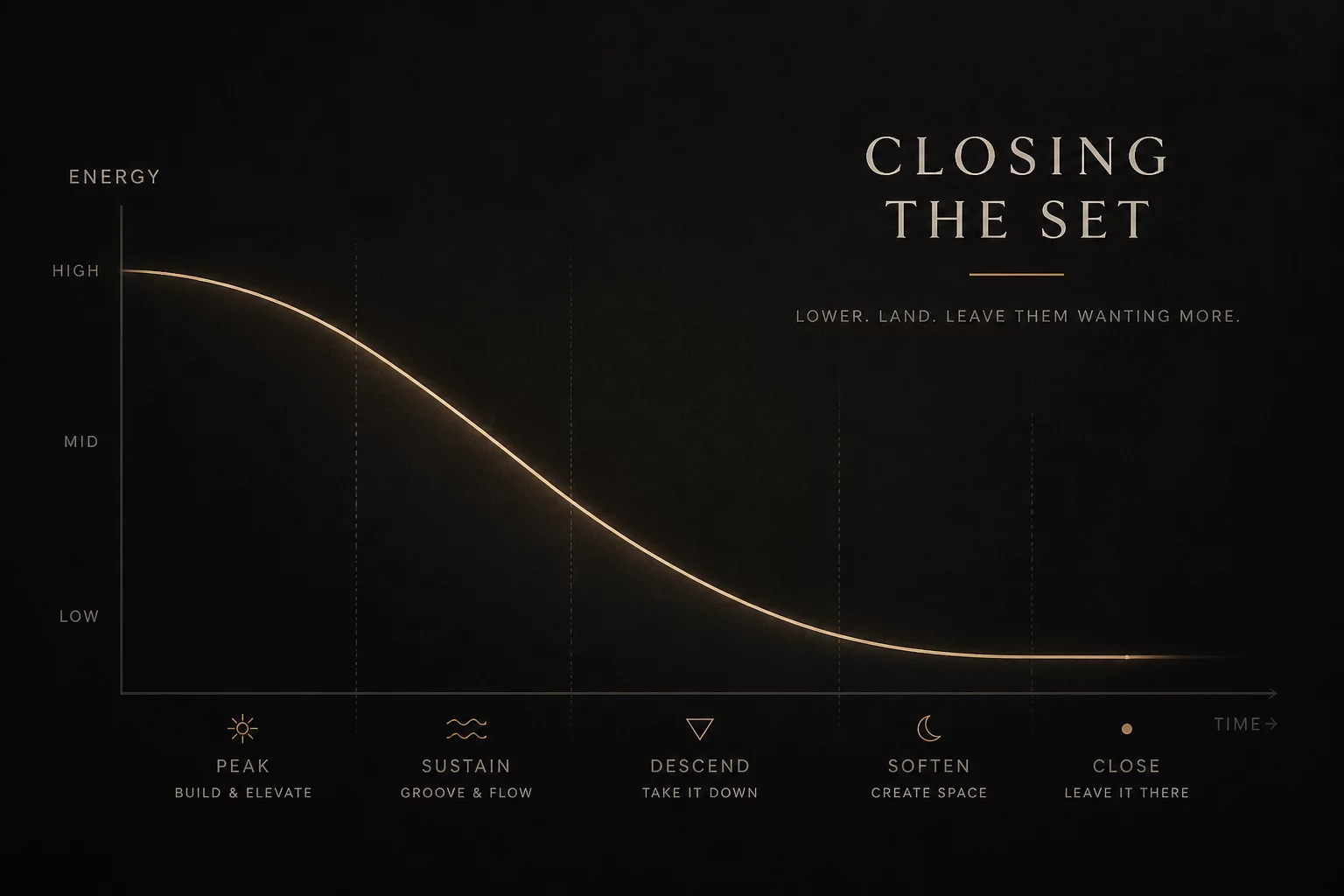
The Smooth Landing Close Arc counters the abrupt cut-off by systematically shaving off transient punch, thinning sub-bass pressure, and opening wide reverberant decay spaces. Rather than crashing energy through abrupt tempo cuts, the trajectory guides dancers through three distinct dissipation stages, transforming athletic exhaustion into shared harmonic grounding.
Executing this sequence demands tactical EQ filtering and careful phrase preservation. As drum kick weight is incrementally attenuated, melodic and vocal textures step forward to command listener focus, ensuring the floor remains emotionally anchored right down to the final reverberated decay tail.
A great closer doesn't abandon the room—it resolves the tension built across three hours into something unforgettable.
Four-Phase Energy Taper Breakdown
Standardized stage metrics for managing frequency load, transition length, and crowd attention during the final segment.
| Parameter Phase | Energy Level | Transition Mode | Recommended Track Type |
|---|---|---|---|
| Phase 1: Peak Sustain | 85% (Level 4) | 64-Beat Blend | Driving Tonal Peak Closer |
| Phase 2: Rhythmic Stripping | 65% (Level 3) | 96-Beat Long Layer | Deep Hypnotic Pad Groove |
| Phase 3: Harmonic Warmth | 40% (Level 2) | 128-Beat Atmospheric Filter | Melodic Ambient Electronica |
| Phase 4: Silent Horizon | 15% (Level 1) | Echo Out & Drone Fade | Unquantized Tonal Outro |
Each phase transition relies on progressive low-shelf cutting rather than drastic master fader moves. Maintaining steady mid-range presence keeps the room connected as percussive density drops away.
Tactical Deconstruction of the Close
Step-by-step sonic actions to dismantle high tempo pressure and cultivate a warm final atmosphere.
Begin by swapping high-transient percussion for rolling organic shaker loops and softer attack claps.
- Pull high EQ down by -2.5dB on incoming tracks to soften aggressive cymbal attacks.
- Extend mix overlap to 64 beats to let the crowd acclimate to the softer texture.
Shift from sharp minor-key tension into warm major-sixth resolutions or deep root drones.
- Track downward Camelot moves (e.g., 9A to 8A to 7A) to induce natural physiological relaxation.
- Introduce analog synth pads that carry acoustic weight without requiring punchy low kicks.
Transition into non-grid or loosely syncopated arrangements that dissolve timekeeping expectations.
- Engage a 1/2 beat dotted tape delay on the final chord stabs as the kick drum cuts out.
- Allow the room ambiance to absorb the natural reverb tail over 16 to 32 seconds of unmixed silence.
Complementary Arc Blueprints
Explore additional structural archetypes to master dynamic transitions, builds, and strategic floor resets.
Set Arc Discussion
Observations, floor reactions, and acoustic calibration feedback from active DJs in the field.
No field notes yet. Be the first to submit a performance observation.