
The Anatomy of Intent: Beyond Technical Alignment
Beatmatching and tempo synchronization are fundamental prerequisites, yet they do not constitute a meaningful transition on their own. When a selector brings in a secondary deck without a clear aesthetic intent, the blend becomes mere auditory clutter. Intent dictates every physical movement on the console: why the high pass filter engages on the fourth measure, why the outgoing kick disappears on bar sixteen, and why the incoming hi-hats remain attenuated until the breakdown.
In professional club environments, the dancefloor senses hesitation or ambiguity immediately. If the incoming track introduces an aggressive rolling bassline while the outgoing vocal still demands emotional focus, the listener is split between two competing narratives. Transition intent requires selecting a dominant focal point and systematically stripping away competing elements so the listener stays anchored.
Every millimetre of fader travel communicates a promise to the dancefloor. If you do not know where that fader is taking the room, neither will the dancers.— Fieldbook Acoustic Research Group
Preparing Serato Beatgrids & Hot Cues
Optimize cue points and beatgrid markers in your library to execute seamless, high-intent transitions under live pressure.
Calibrating Frequency Dominance and Energy Handoffs
The physical mechanics of executing intent rely heavily on EQ sculpturing and gain staging. The most common structural pitfall during long blends is frequency masking, where two kicks or basslines occupy identical sub-frequencies between 40 Hz and 100 Hz, causing phase cancellation or uncontrolled volume spikes.
Frequency Management Reference
- Low Frequency Handover (Sub 120Hz) Hard Cut at 16 or 32 Bar Mark
- Mid Range Isolation (300Hz - 3kHz) Complementary 40/60 Split
- High Frequency Sheen (> 5kHz) Gradual 8-Bar Linear Ramp
- Master Headroom Clearance Constant -3 dB True Peak
By strictly managing which deck owns the sub-bass at any given second, the acoustic impact remains punchy and controlled. When transitioning to lower energy, pulling out the low-end of both tracks simultaneously for half a bar creates acoustic anticipation, making the incoming groove feel deliberate and grounded upon entry.
Three Archetypes of Live Transition Execution
Depending on set progression and floor dynamics, transition intent generally groups into three practical operational workflows. Executing each requires distinct physical timing and mixer discipline.
The Continuous Weaver (Hypnotic Flow)
Layering both tracks across 64 or 128 bars with meticulous EQ trimming, creating a third transient sonic texture that exists only during the blend.
The Pivot Shift (Genre or Energy Reset)
Stripping energy down to atmospheric reverb tails or snare rolls before cutting cleanly into a contrasting tempo or groove direction.
The Direct Handover (Rhythmic Impact)
Bringing the incoming track in on a definitive phrase drop with instant bass replacement, capitalizing on immediate kinetic momentum.
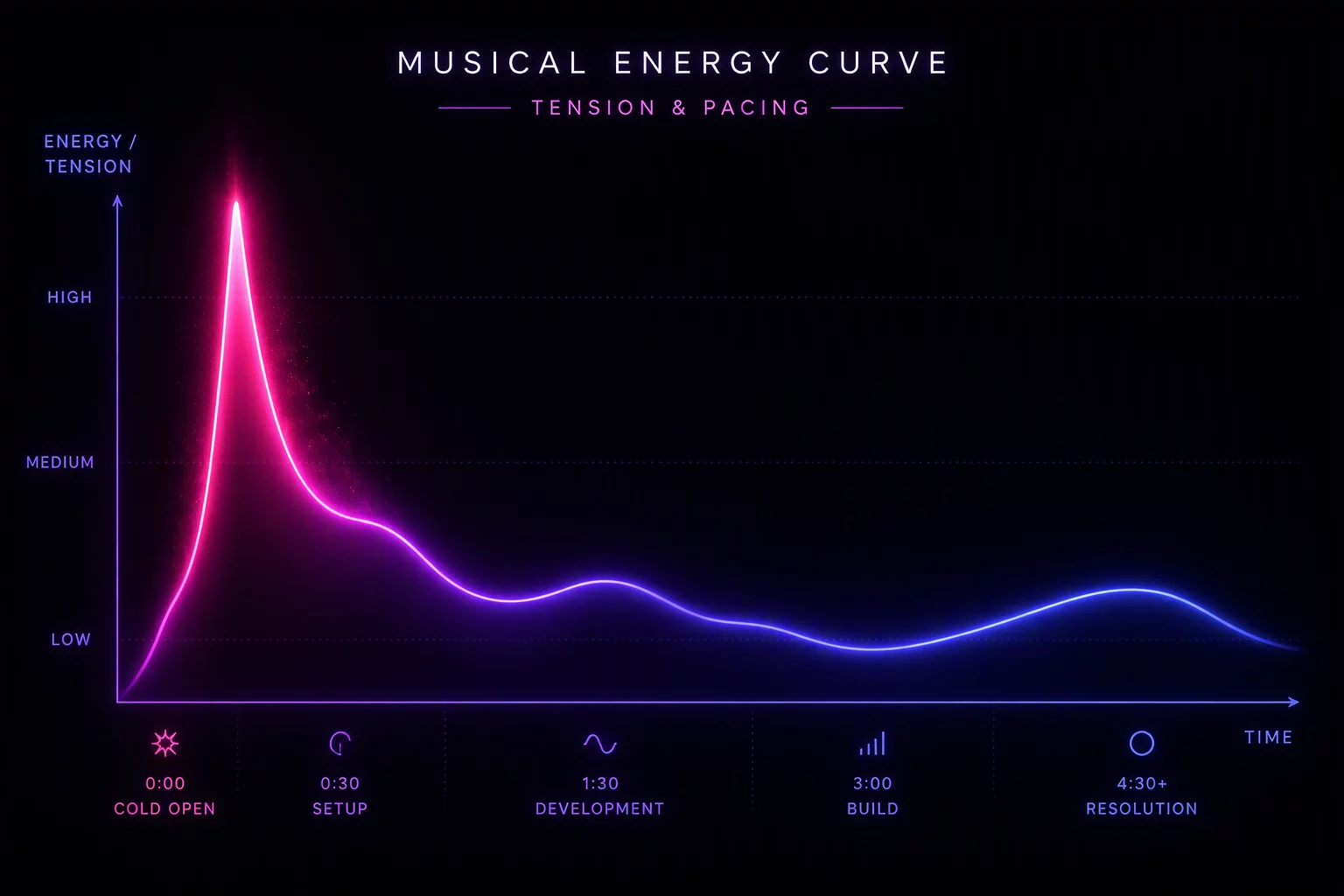
Choosing between these archetypes on the fly demands reading the floor's fatigue level. After an extended fifteen-minute peak section, a hypnotic continuous weave might feel overwhelming, whereas a direct pivot shift offers dancers the psychological breathing room needed for the next build.


Fieldbook Insights & Feedback
Marcus Reynolds
Verified ArchitectThe harmonic arc mapping and reset point timings described here matched my field tests in the club environment accurately.
Soren Lindqvist
Exactly. Calibrating the energy crossover at 32-bar phrasing eliminated abrupt drops in tension on the floor.
Contribute Observation