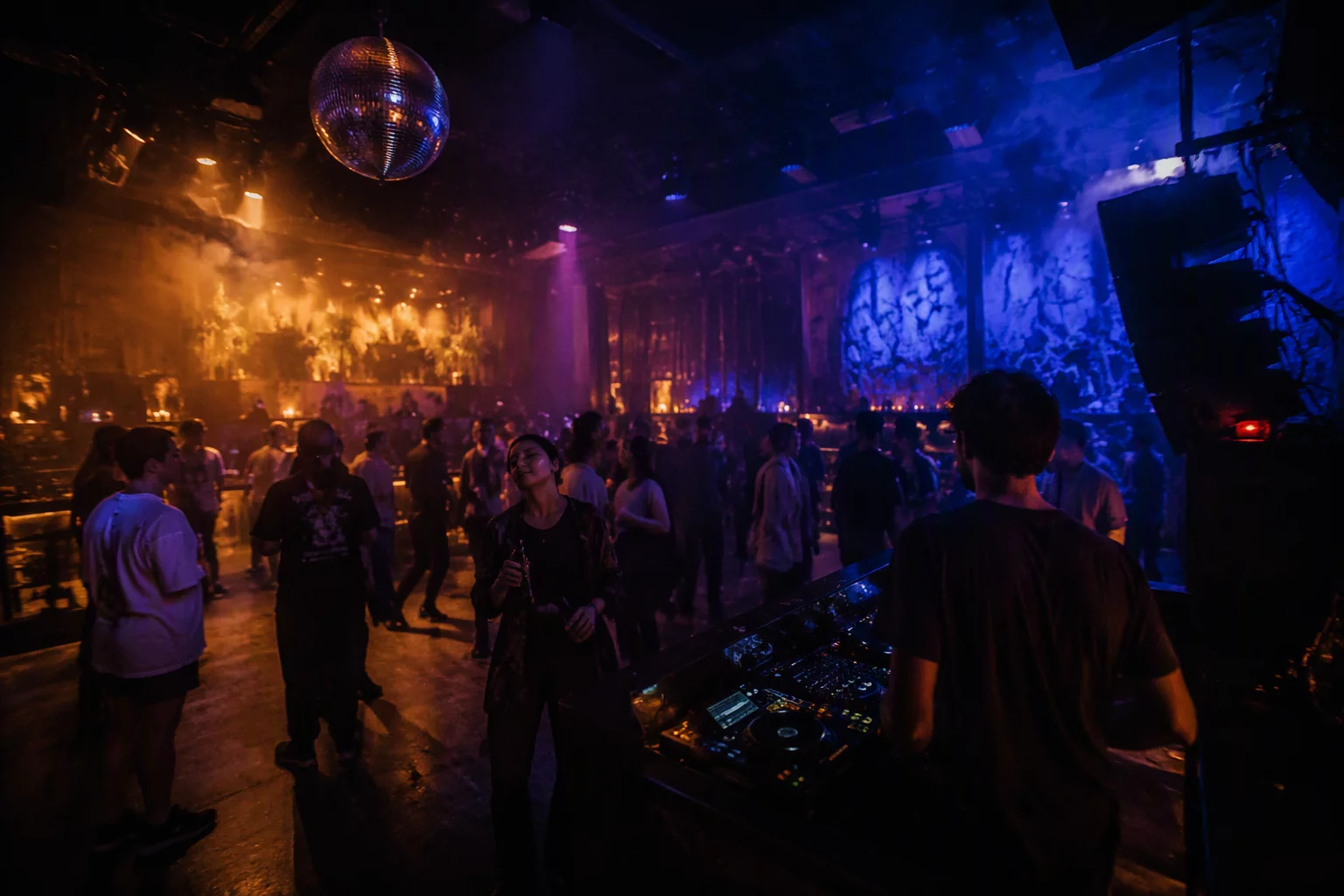
Relieving the Pressure of Dancefloor Retention
Throughout a performance, every track selection carries a transactional responsibility: it must sustain kinetic motion and preserve floor cohesion. This operational stress forces DJs to prioritize rhythmic groove, predictable phrasing, and stable frequency envelopes. The closing selection, however, operates outside this transactional cycle. Because no track follows it, the fear of emptying the floor dissolves entirely.
When floor retention is no longer the metric of success, artistic decisions shift from propulsion to resonance. A track that would cause a critical energy drop in the middle of a peak-hour segment suddenly functions as a profound catharsis when positioned as the terminal statement. Listeners stop anticipating the next transition and finally settle into total presence.
The closing track is the only record in your crate that does not need to justify what comes next. It exists solely to answer for everything that came before.— Elena Rostova, Structural Performance Fieldbook
Preparing Cues and Energy Tags in Serato
Learn how to categorize your crates by resolution intent and harmonic footprint for effortless set landings.
Acoustic and Frequency Decompression Dynamics
Prolonged exposure to high-pressure sound systems causes auditory fatigue across the dancefloor. Dense kicks, driving percussion, and compressed upper-mid frequencies gradually numb perceptual acuity. A masterful closing track initiates acoustic decompression, creating spacious dynamic range and allowing room reverberation to breathe naturally.
Closing Track Energy vs. Peak Hour Architecture
- Frequency Distribution Open dynamic range, wider stereo field, reduced sub-bass compression
- Rhythmic Structure Expressive time, rubato intros, non-four-on-the-floor cadences
- Transition Phrasing Hard cut, ambient fade, or prolonged natural reverbed decay
- Primary Objective Memory consolidation, emotional grounding, room reset
When lower frequencies thin out and melodic elements gain stereo width, the physical sensation in the venue shifts from pressure to release. Dancers look around, make eye contact, and absorb the collective shared experience of the night.
Three Functional Archetypes for the Final Selection
Depending on the emotional arc of your performance and the physical curfew of the room, terminal track selection generally falls into one of three structural archetypes.
The Emotional Catharsis Archetype
Delivering rich melodic hooks, soaring vocal lines, or lush chords that channel the accumulated energy of the night into shared euphoria.
The Ambient Dissolution Archetype
Stripping all rhythmic elements away over two to three minutes, easing the audience gently back into natural room acoustics and conversational awareness.
The Total Genre Anomaly Archetype
Playing a classic soul, ambient, slow-tempo disco, or cinematic piece that intentionally shatters expectations and marks an unforgettable punctuation mark.
Choosing between these archetypes requires reading the room's physical fatigue and ambient atmosphere. A crowd that has given everything to a grueling three-hour techno set often welcomes gentle ambient dissolution far more than another aggressive peak.



Fieldbook Insights & Feedback
Marcus Reynolds
Verified ArchitectThe harmonic arc mapping and reset point timings described here matched my field tests in the club environment accurately.
Soren Lindqvist
Exactly. Calibrating the energy crossover at 32-bar phrasing eliminated abrupt drops in tension on the floor.
Julian Vance
Field ContributorA critical distinction is that the closing track isn't just low energy; it's high resolution. The psychological afterglow relies on that clarity.
Contribute Observation